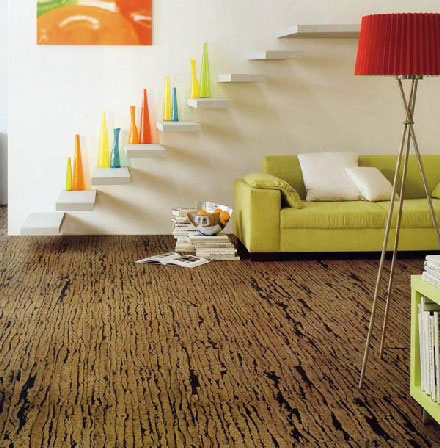
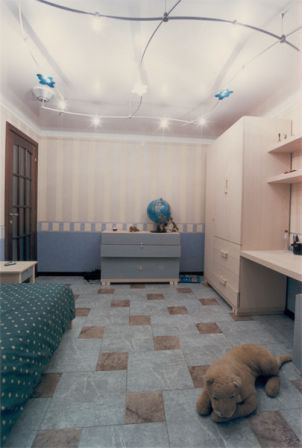
Walls are probably most noticeable and important part of interior.
When entering into room one notices color, kind and surface of wall straight away, together they determine psychophysiological atmosphere in room. No wander that special attention is paid to walls in interior of house. We all want walls of our house to be beautiful, cozy and safe no matter how differently we see joinery of walls or what ideas we have about it.
From earliest times man tried to implement in practice his need to create decor of interior of living place: wall paintings in caves, frescos in Egyptian tombs, raised work on walls and columns of temples, frescos in Antique houses, frescos and mosaic in Christian temples, raised work and sculptures in Roman and Gothic churches and that sort of things.
The function of walls, which is called in this article "intermission", that is a made-up word, is to create space where a person feels comfortable. A lot has been said about optical characteristics of walls, which are able to constrict and widen space between them, to influence illumination and give it a special kind of character. We were talking about walls as of an abstract thing, and its main parts were considered to be form and dimensions. Now it is time to talk about thing which gives real character to walls - their joinery.
"Start with walls" - this is rule, which should be observed while decorating house.
While thinking over joinery of walls one should remember about order of work: material - color - design; that means that material for joinery should be chosen first, then color and design. availability of materials, which is offered by producers, is rather extensive; most widespread materials have already been mentioned in "Materials for Household" chapter. It is important to choose right material, which would correspond with image that you would like your building to have.
The logical order of choosing should be based first of all on functional purpose of building; its dimensions (big - small), to which part of world it is oriented (cold - warm), character of illumination (light - dark).
Definitely, main principle of choosing material for joinery can be most mediocre: "cheap and nasty".
No doubt, even this principle can bring some good results, if it coincides with those numerous rules and peculiarities, which give optimal solutions.
If possible, natural materials which let in air and have low temperature conductivity ("warm") should be chosen for bed-sits. These materials are wood, plaster, paper and textiles.
Materials with smooth and matt surface should be used for small living rooms. These materials are smooth wallpaper (not embossed), smooth plaster painted with glue-water color and panels from wooden materials painted with vanish or decorated with wood veneer from hardwoods which have badly-marked annual rings.
There should be light wallpaper, plaster painted in light color and timber of materials in dark rooms.
The coloring and structure of materials in small rooms should be self-colored: wallpaper should have reasonable and small wallpaper design, plaster should have pastel shades, texture of wood materials should be small and tame, which is typical for some wood species.
These are main rules which should be observed while choosing finishing material for walls. All rest will depend on how colorful you want your walls and all room to be.
If you want interior to be a little bit rough then even wooden furring will do. texture of branch timber of pine or fir is very suitable for a country house, for instance. A wall, one third of which is encased with wooden panels, will make room look businesslike and official, which is very convenient for a study and practical for a nursery.
It is also possible to turn walls inside out: use brick laying and interior will have solidity and realism. It is important to remember though that surface of wood, stone or brick is perceived in a family way when looked at closely and requires a large room.
Manufactured construction materials have a special role, they imitate surface and form of wood or stone, they also imitate a construction of wall, which is not common to it. reference is to wallpaper, tile and sheeting, which imitate brick or stone laying, banded rustication of walls, marble or ceramic tile and so on. There are no particular objections against such a way of making walls attractive, as if they were covered with wood or stone; and it is widely used as it is cheaper and even sometimes more practical than original materials. It is only important to make them look realistic so that they do not give away a badly made forgery from first sight.
Avoid using cheap and unskillful forgeries which imitate stone, brick or wood - walls are perceived as bad as forged material.
If you want so much your walls to look like marble or brick try to find finishing materials which are able not only to imitate texture of these materials artistically but also to imitate surface of this texture. For example, there is ground paper wallpaper, sheeting and tile materials which really even by-touch imitate surface of plaster, marble and brick. They are expensive, but of cause not as expensive as natural materials.
|