Parquet – everything about wood species
Parquet design and surfaces
Parquet is a natural
Parquet ecological
Parquet durable floor coating
Wood flooring industry
All types of parquet
Mosaic parquet, elegant board
Arolla pine parquet
Parquet price
Parquet sale
Installation of parquet
Parquet board
|
Manufacturing of parquet and parquet board
Parquet board
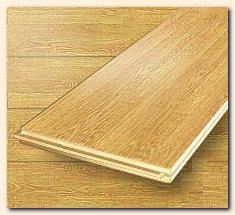
The parquet board - is a kind of floor covering from natural wood.
One of advantages of a parquet board is that it is sold cut and dried - board is already polished and varnished or oiled at a factory. Besides to stack a parquet board is much easier and faster, than block parquet , owing to its greater size and special technology of assembling.
The parquet board is a three-layer construction from natural wood with perpendicular arrangement of layers, and they execute a certain function of their own.
The bottom layer of parquet board is usually made of pine or white deal plywood.
The middle layer consists from coniferous strips of board - pine or white deal. Moreover lamellas of middle layer are perpendicular to wood fibers of bottom layer. Such construction makes parquet board much stronger and firmer to changes of temperature and humidity. Grooves and crests necessary for connection of parquet boards in one unit are in middle layer.
The top layer of parquet board represents a thin cut of fine woods, which are also used in manufacturing of block parquet. This layer is responsible for appearance and, what is more important, for durability of a parquet board: thicker layer is, more parquet board can be polished. Besides, parquet board is necessarily covered with several layers of varnish or oil at a factory. This covering protects board from external influences, doesn’t let dirt into wood and helps to make floor look more beautiful.
The one-strip parquet board can be exposed to polishing up to 7 times and its service life in house conditions is 35 - 40 years.
|
|
Parquet board features
Shrinkable film packaging, five boards in one pack
Groove-crest from 4 sides
Length: from 1,20 to 2,10 m.
Width parquet: 120 - 180 mm
Thickness parquet : 15 mm
Humidity parquet 8-10%
Density parquet: 700 kg/m3
Ideal geometry and polishing
Permissible variation 0,1 mm per 2,5 long meter.
- Thickness: on average about 700 kg/cubic meter, hardness: 3,7 - 3,9. |
Parquet and parquet board costs
| Item | Dimensions , mm | Unit of measure | Marcant ( B ) | Rustical ( C ) |
Solid parquet floor boards
polished, unvarnished, OAK 1200 x 120 x 15 [ mm ] | 
| m2 | 23 $ *
buy parquet | 21 $ *
buy parquet |
Solid parquet floor boards
polished, unvarnished, OAK 1300 x 120 x 15 [ mm ] |
| m2 | 23 $ *
buy parquet | 21 $ *
buy parquet |
Solid parquet floor boards
polished, unvarnished, OAK 1400 x 120 x 15 [ mm ] |
| m2 | 24 $ *
buy parquet | 22 $ *
buy parquet |
Solid parquet floor boards
polished, unvarnished, OAK 1500 x 120 x 15 [ mm ] |
| m2 | 24 $ *
buy parquet | 22 $ *
buy parquet |
Solid parquet floor boards
polished, unvarnished, OAK 1200 x 140 x 15 [ mm ] |
| m2 | 26 $ *
buy parquet | 23 $ *
buy parquet |
Solid parquet floor boards
polished, unvarnished, OAK 1300 x 140 x 15 [ mm ] |
| m2 | 26 $ *
buy parquet | 23 $ *
buy parquet |
Solid parquet floor boards
polished, unvarnished, OAK 1400 x 140 x 15 [ mm ] |
| m2 | 26 $ *
buy parquet | 23 $ *
buy parquet |
Solid parquet floor boards
polished, unvarnished, OAK 1500 x 140 x 15 [ mm ] |
| m2 | 26 $ *
buy parquet | 23 $ *
buy parquet |
Solid parquet floor boards
polished, unvarnished, OAK 1200 x 150 x 15 [ mm ] |
| m2 | 28 $ *
buy parquet | 24 $ *
buy parquet |
Solid parquet floor boards
polished, unvarnished, OAK 1300 x 150 x 15 [ mm ] |
| m2 | 28 $ *
buy parquet | 24 $ *
buy parquet |
Solid parquet floor boards
polished, unvarnished, OAK 1400 x 150 x 15 [ mm ] |
| m2 | 28 $ *
buy parquet | 24 $ *
buy parquet |
Solid parquet floor boards
polished, unvarnished, OAK 1500 x 150 x 15 [ mm ] |
| m2 | 28 $ *
buy parquet | 24 $ *
buy parquet |
Solid parquet floor boards
polished, unvarnished, OAK 1200 x 160 x 15 [ mm ] |
| m2 | 29 $ *
buy parquet | 25 $ *
buy parquet |
Solid parquet floor boards
polished, unvarnished, OAK 1300 x 160 x 15 [ mm ] |
| m2 | 29 $ *
buy parquet | 25 $ *
buy parquet |
Solid parquet floor boards
polished, unvarnished, OAK 1400 x 160 x 15 [ mm ] |
| m2 | 29 $ *
buy parquet | 25 $ *
buy parquet |
Solid parquet floor boards
polished, unvarnished, OAK 1500 x 160 x 15 [ mm ] |
| m2 | 29 $ *
buy parquet | 25 $ *
buy parquet |
Solid parquet floor boards
polished, unvarnished, OAK 1800 x 140 x 15 [ mm ] |
| m2 | 29 $ *
buy parquet | 25 $ *
buy parquet |
Solid parquet floor boards
polished, unvarnished, OAK 1900 x 140 x 15 [ mm ] |
| m2 | 29 $ *
buy parquet | 25 $ *
buy parquet |
Solid parquet floor boards
polished, unvarnished, OAK 2000 x 140 x 15 [ mm ] |
| m2 | 29 $ *
buy parquet | 26 $ *
buy parquet |
Solid parquet floor boards
polished, unvarnished, OAK 2100 x 140 x 15 [ mm ] |
| m2 | 29 $ *
buy parquet | 26 $ *
buy parquet |
Solid parquet floor boards
polished, unvarnished, OAK 1800 x 160 x 15 [ mm ] |
| m2 | 30 $ *
buy parquet | 26 $ *
buy parquet |
Solid parquet floor boards
polished, unvarnished, OAK 1900 x 160 x 15 [ mm ] |
| m2 | 30 $ *
buy parquet | 26 $ *
buy parquet |
Solid parquet floor boards
polished, unvarnished, OAK 2000 x 160 x 15 [ mm ] |
| m2 | 30 $ *
buy parquet | 27 $ *
buy parquet |
Solid parquet floor boards
polished, unvarnished, OAK 2100 x 160 x 15 [ mm ] |
| m2 | 30 $ *
buy parquet | 27 $ *
buy parquet |
Solid parquet floor boards
polished, unvarnished, OAK 1800 x 180 x 15 [ mm ] |
| m2 | 30 $ *
buy parquet | 27 $ *
buy parquet |
Solid parquet floor boards
polished, unvarnished, OAK 1900 x 180 x 15 [ mm ] |
| m2 | 30 $ *
buy parquet | 27 $ *
buy parquet |
Solid parquet floor boards
polished, unvarnished, OAK 2000 x 180 x 15 [ mm ] |
| m2 | 30 $ *
buy parquet | 28 $ *
buy parquet |
Solid parquet floor boards
polished, unvarnished, OAK 2100 x 180 x 15 [ mm ] |
| m2 | 30 $ *
buy parquet | 28 $ *
buy parquet |
Solid parquet floor boards
polished, unvarnished, OAK 800 x 80 x 12 [ mm ] |
| m2 | 22 $ *
buy parquet | 20 $ *
buy parquet |
Solid parquet floor boards
polished, unvarnished, OAK 490 x 70 x 12 [ mm ] |
| m2 | 19 $ *
buy parquet | 17 $ *
buy parquet |
Solid parquet floor boards
polished, varnished - OAK 800 x 80 x 12 [ mm ] |
| m2 | 24 $ *
buy parquet | 21 $ *
buy parquet |
Solid parquet floor boards
polished, varnished - OAK 490 x 70 x 12 [ mm ] |
| m2 | 22 $ *
buy parquet | 20 $ *
buy parquet |
Block parquet
The main building material in Belarus and Russia is wood, and history of covering floor with parquet goes back to epoch of nobility, when parquet became an integral part of prosperity and wellbeing. It was functional and at same time it was a work of art and became a valuable part of world culture.
The block parquet easily combines beauty and durability, warmth and solidity, art and luxury, and such an important factor nowadays as availability. Excellent qualitative characteristics have given it deserved popularity.
Although, there are lots of different kinds of parquet, it is possible to mark out three categories of block parquet basing on saw cut in relation to annual rings - radial, tangential and mixed. For different types of saw cut various output of parquet on volume is characteristic at processing raw material. Parquet of radial saw cut is received in smallest amount, and an output of parquet of mixed saw cut, on contrary, is big enough; that directly influences cost of block parquet. Nevertheless, basic characteristics of parquet of mixed saw cut, for example hardness and stability of geometrical sizes, are practically identical.
As it was said before, there are many variants of choosing breeds of wood, further we shall dwell on some of them and give rough characteristics so that it would be possible to compare materials.
|
| Parquet board oak
|
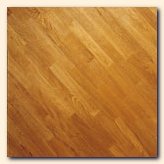
| Oak is a traditional Russian breed for manufacturing floors, it is also widespread in Europe, Asia and America. Oak has great varieties, about 200 species. Oak albur is light yellow, and mature wood has shades from light brown up to yellow brown with a beautiful structure on a cut. Its main advantages are strength, durability and stability to external influences. Oak darkens a little with time, which makes it look noble, and at same time it makes floor look well-groomed. Oak dries up rather slowly, and at accelerated drying it may have crackles. Density: on average about 700 kg/m3, hardness: 3,7 - 3,9. |
| Beech parquet
|
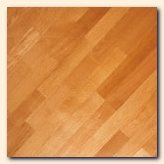
| Traditionally parquet floors are made of beech, and it is widely used in Europe. Wood has light color, with a red-yellow or grayish shade. Due to homogeneous structure of wood beechen floor visually looks quiet, warm, even soft, though beech is a firm and strong tree which has similar characteristics with oak. It is well processed by cutting tool and it polishes well. beech quickly reacts to change of humidity and in this respect it is a so-called "whim". Wood of beech goes through special thermal processing leveling its painting and giving it redder tones. Density of a beech - 650 kg/m3, hardness: 3,8 |
| Ash parquet
|
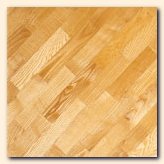
| Ash grows mainly in central part of Europe though there are American and Japanese breeds. Ash wood is light, slightly yellowish, with a specific picture on a cut. It is almost impossible to tell difference between albur and mature wood. Ash is harder than oak, but is very elastic and consequently is often used for sports buildings. It reacts well on mechanical conversion. Ash may have crackles, that is why its drying should be done very slowly and carefully. Density is about 700 kg/m3, hardness: 4,0 - 4,1. |
| Cherry parquet
|
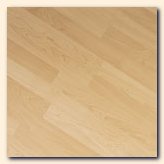
| Cherry grows across all Europe, in Asia Minor, USA and some zones of Central America. There is also American cherry growing in Canada and Northern part of USA. Albur of cherry is narrow, yellowish, and mature wood is pink-brown, sometimes pink-gray. Wood has straight fiber with a rather even structure.
The wood of cherry is very decorative and has a beautiful warm shade, but it darkens with time. It is much softer than oak, it makes it better for all kinds of works. Density of material is about 580 kg/m3., hardness: 3,0 - 3,3. |
| Maple parquet
|
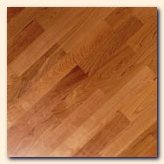
| Maple grows in zones with a temperate climate across all Europe, in America, in Far East and in other regions. Wood has almost white color, sometimes with slightly yellowish shade. Albur and mature wood practically do not differ. Maple gets a little yellow with time. Maple is a refined material for internal furnishing, it helps to contrast background for dark furniture. Maple can have crackles; therefore it demands very careful drying. Its density: 530 - 650 kg/m3, its hardness can differ greatly. |
| Walnut parquet
|
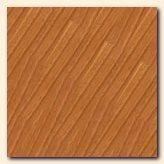
| Walnut grows everywhere, but basic regions are: Southern Europe, Asia, and America. Walnut has a light albur, and mature wood has brown grey color with darker impregnations. Walnut has a remarkable quality, it changes color and structure of wood depending on climate and ground, however walnut is always very decorative that is why for a long time it is widely applied for furnishing of interiors and manufacturing of furniture. Walnut is rather firm, but can be worked-up easily enough, alongside with that, it is steady against deformation and at drying does not get crackles. given material has density from 600 up to 650 kg/m3, hardness about 5,0. |
| Item | Dimensions , mm | Unit of measure | Select ( A ) | Natur ( B ) | Rustical ( C ) | Geschteif ( D ) | Standart ( E ) |
Solid wood oak parquet
polished, unvarnished 600 x 90 x 15 [ mm ] |
| m2 | 28 $ *
buy parquet | 25 $ *
buy parquet | 22 $ *
buy parquet | 20 $ *
buy parquet | 18 $ *
buy parquet |
Solid wood oak parquet
polished, unvarnished 700 x 90 x 15 [ mm ] |
| m2 | 29 $ *
buy parquet | 26 $ *
buy parquet | 23 $ *
buy parquet | 21 $ *
buy parquet | 19 $ *
buy parquet |
Solid wood oak parquet
polished, unvarnished 800 x 90 x 15 [ mm ] |
| m2 | 29 $ *
buy parquet | 27 $ *
buy parquet | 24 $ *
buy parquet | 22 $ *
buy parquet | 20 $ *
buy parquet |
Solid wood oak parquet
polished, unvarnished 900 x 90 x 15 [ mm ] |
| m2 | 30 $ *
buy parquet | 28 $ *
buy parquet | 25 $ *
buy parquet | 23 $ *
buy parquet | 21 $ *
buy parquet |
Solid wood oak parquet
polished, unvarnished 1000 x 90 x 15 [ mm ] |
| m2 | 31 $ *
buy parquet | 29 $ *
buy parquet | 26 $ *
buy parquet | 24 $ *
buy parquet | 22 $ *
buy parquet |
Parquet classification
Parquet can have eth following classification, based on way of manufacturing :
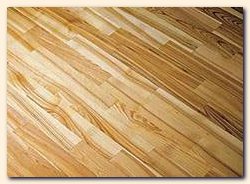
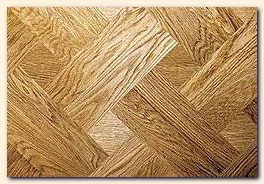
Block parquet consists of separate parquet planks. planks can be solid (made of one piece of wood) or multilayer (composite). Block parquet can be classified according to kind of saw cut:
radial parquet planks
tangential parquet planks
mixed parquet planks
|
| 
|
| tangential parquet planks
| Block parquet consists of separate parquet planks
|
Parquet laying
Basing on quality of planks:
radial - first-class parquet made of radial saw cut wood, 25-30% «marble» possible (implementation of harmony and nobility);
exquisite - first-class parquet, selected according to color of wood, of radial and tangential saw cut (combines softness of radial and fancifulness of tangential pictures);
natur - first-class parquet with some differences in color of radial and tangential saw cut (animated gift);
marcant - parquet of radial and tangential saw cut. Deviations in color are possible (there are various texture and tones)
rustical - 1 category parquet of mixed saw cut, light and dark knots of 5mm are possible, drying crackles, and differences in color.
Inlaid, mosaic or scutal - on basis of panels which are made from small parquet planks. Inlaid way is applied only in art parquet; it makes intricate ornament on panels. Inlaid parquet is made in two ways: ornament from separate details is made like a mosaic (the actual inlaid way) or is inserted into parquet made from base breed, decorative elements, wooden as well as not, but made of other materials (manual). In special cases grooving on wooden surface of parquet is used.
Scutal - separate planks are fixed on underlayment, which helps to make picture more diverse and at same time to do laying quicker. Inlaying of scutal parquet is performed in two stages. First of all, boards with elements of ornament are fixed. All rest (the background and simple figures) are put later. Some days later after assembling, during this time parquet should lay and fix, it is scraped, polished and varnished. Special attention is paid to edges under plinth. They must be worked in such a way that water could not get under.
Fabricated wood block flooring - easiest way to have parquet flooring. It is a construction of several layers of wood (as a basis pine is used, for top layer - valuable breeds). It is sold already cut and dried - polished and varnished, which considerably reduces expenses for laying.
Exploitation of parquet demands expenses for maintenance of its appearance, especially if it is art parquet . Optimum level of humidity in building should not exceed or be below 50-70 %, temperature +18+22 C.
Almost all breeds of trees are used as materials for parquet: birch, nut, pine, larch, maple, oak, beech, hornbeam, ash, elm, cherry, pear, apple-tree, alder, juniper, English elm, cornel; Brazilian breeds - black rosewood, mulberry, African - iroko, wenge; valuable and expensive - black tbony tree, black rosewood, amaranth, yellow and red santalaceous tree, tobacco tree, citric, satiny English elm, or sateen tree, olive, iron, yew, plane tree, white and red cypress, thuja, red magon, boxtree, sahandr etc.
Some firms offering services on flooring art parquet, advertise products from African or other overseas breeds and assure, that "their durability and hardness surpass oak, and unique color scale and microstructure of wood make such parquet attractive to most sophisticated aesthetes ". Besides, some of these breeds are considered sacred at places where they grow. Things made from them are used as averters. According to legends, these trees are also able to cure people.
|
|
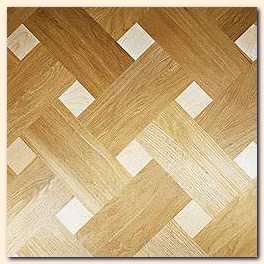
| Plaiting and thong ways of laying block parquet
|
The wood volatile oils create miracle aura in building . It is even advised to go barefoot on such parquet. There are examples when by means of similar therapy people got rid of illnesses. Development and manufacturing of art parquet on Russian market of parquet manufacturing is achievement of 1990ies. At that time a number of large firms, offering development of new parquet or creation of a copy of existing historical samples of art parquet, appeared. But there is also another point of view: art parquet belongs to palaces of epoch which has gone forever; it is an integral part of interior created by well-known architects. Recently in domestic market choice of import parquet materials has greatly extended. However there are factories in Russia which make parquet from domestic raw materials (Krasnodar, Adygea, Kirov and Kaluga regions). They have history, traditions and experience of their own. Import or domestic, household or art, parquet today is fashionable, beautiful, comfortable and ecological (!).
Parquet is one of most expensive floor coverings. technology of its stacking is much more complex, than, for example, of linoleum or synthetic covering, it has to be handled carefully. These features are deterrents for many Russians who of all possible covering would prefer parquet. More than 100 large and medium-sized enterprises are engaged in manufacturing of various kinds of parquet in Russia. Total amount of manufacturing of all kinds of parquet on large and medium-sized enterprises in 2000 has made, according to Goskomstat of Russian Federation, about 2 million m2 (that is14,5 % less than last year).
So, block parquet consists of wooden planks with overall dimensions: length from 200 up to 450 mm, width from 40 up to 70 mm, thickness from 14 up to 22 mm (most widespread - 15 and 22 mm). Block parquet is made of valuable breeds of wood; on lateral and face sides, as a rule, there are thorns and grooves for better sheaf of parquet planks while assembling. durability of block parquet is defined by thickness of "working" layer (distance from facial area of parquet up to thorns). For example, parquet with thickness of 15 mm has "working" layer which makes 8 mm, and accordingly, it can be used about 50 years. Advantages of block parquet are, except for its massiveness (uniformity of structure) and durability, wide choice of variants of its laying: simple ("mitered herringbone flooring", "staggers", "squares", etc.) and art laying ("stars", "borders", "rhombuses", "guilloche", etc.).
|
The history of parquet
The history of parquet is very long . It takes its begging from ancient times when people began to cover floor with simple wooden logs. Wood easily gave in to working. Certainly, among breeds of wood there were with rare qualities, hence, expensive and elite kinds. If pine or oak suited simple flooring from logs or "bricks", trees like maple, ash, apple-trees, alder (let alone valuable redwood and hebeny) had to be worked more daintily. Graceful parquet tiles were made of rare kinds of trees.
The word "parquet" is of noble French origin. However in Middle Ages in France it meant a small park, a little later - part of a carpeted hall used for au nces. Carpets have gradually disappeared, and name was used for wooden floorings and has extended outside France. Parquet floors became a part of interior in European baroque castles in rococo style; they were as skillfully made, as Gobelin tapestries, fretted ceilings, graceful carved furniture. Since XVI century floors in Russia were laid from oak staves, stacked in a picture which was named "mitered herringbone flooring". Staves, as a rule, were stacked on roughly cut basis from soft wood, mostly pines. primordial and widespread folk art of woodcarving, skills in art work and stacking of floor in old Russian architecture have created all preconditions for fast development of art parquet in Russia.
The European parquet of XVII century can be compared to a carpet or a mosaic: whimsical ornament manually made from wooden tiles of various shades or was inlaid as wooden basis. Such parquet was called "art parquet". In Russia parquet floors were Peter's I innovation who brought cabinetmakers from West, in particular, from Germany. Till that time floor in Russian cathedrals, rich houses and public buildings were covered with wooden boards or stacked with oak bricks. They were put on limy basis, and between parts was lime mixed with pitch. same oak floor was in Vasily Blazhennogo's Temple built at times of Ivan Terrible on Red Square . Soon primordially Russian art of woodcarving was used in manufacturing fashionable in West parquet tiles, and floors in Russian buildings, since Peter's times, became artistic. At that time best Russian carvers worked in Armory Museum of Kremlin. In 1711 Peter I published decree to close workshops of Armory Museum, and carvers were sent to build northern capital. innovation applied in laying floors of Petersburg buildings, was picked up by Moscow town-planners. Monuments of parquet art of XVIII century can be seen in palace of Ostankino manor, Chinese palace.
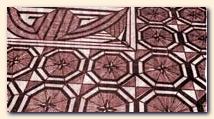
Archival documents show , that "the command of architect Chevakinskogo which was making block floors for Winter palace, consisted of Vladimir Beklemishev's, ship joiners, who knew joiner's works well, and other 38 joiners". (S.Peterburga, fund 470, inventory 209/643, file № 38. 1761)
In 1749, 26 jambs and 64 crosses of oak wood were sent for palace parquet from Astrakhan province, which were stored in spare Smolny court yard together with jambs of pear tree, cornaceous English elm, plane trees, boxwood, ash and beechen ranges - we learnt about it from history of Tsarskoe Selo which was edited in 1827. All that wood was sent to Tsarskoe Selo in 1750 and served as material for first block parquet. Later assortment of trees used for parquet got wider, and alongside with local breeds rare and expensive grades of imported "overseas" trees were used.
In XIX century well-known samples of art parquet were laid in State Russian museum and Winter palace. And in same century art parquet experienced decline. There was a fair quantity of factories specializing on mass production of parquet at last quarter of century. There were three factories producing parquet in Petersburg. In Moscow - eight. Gradually quantity of factories increased, and their geography extended. In 1914 in Russia parquet was made already at 85 enterprises. This time is considered to be beginning of application of parquet in house construction.
In XX century factory parquet was widely used in house construction , art parquet almost disappeared approximately up to middle of century. Masters of art parquet worked on restoration of monuments of art, and works on creation of new parquet revived only thanks to construction Moscow "Stalin" high-rise buildings
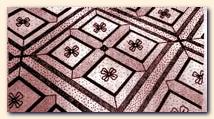 Right at beginning of XXI century, despite of development of science and technology, one can doubt whether all technological secrets of old hardwood floor layers were restored . It can be said, that owing to literally several hardwood floor layers art parquet was saved in our country. technology changed in due course, details of ornament and picture today are not cut out manually any more, but with help of machines and even with use of laser and computer; there are many machines facilitating work. Its use helps to increase accuracy of cutting of details, but there are counterarguments: it is considered, that laser damages wood. factory parquet is produced from not very expensive breeds of wood, such as fir-tree, pine, oak, and is laid like "mitered herringbone flooring ", "deck" flooring or "thong" ("plaiting"). To smooth irregularities on edge, border is made, and then parquet is usually varnished or polished.
|
|